PACKING & SHIPPING
How should engineering granite be packed, shipped and checked on arrival?
Direct answer: Granite packing should be designed around product shape, dimensions, weight, finished faces and transport method. Before dispatch, confirm the packing unit, support and separation, protection for edges and holes, case labels, packing list, weights, handling conditions and destination documents. Packing reduces transport risk but does not replace correct handling, cargo insurance or arrival records.
Updated 2 September 2026 · Prepared from the current packing information of Shandong Kaizhong Stone Co., Ltd.Export packing · wooden crates
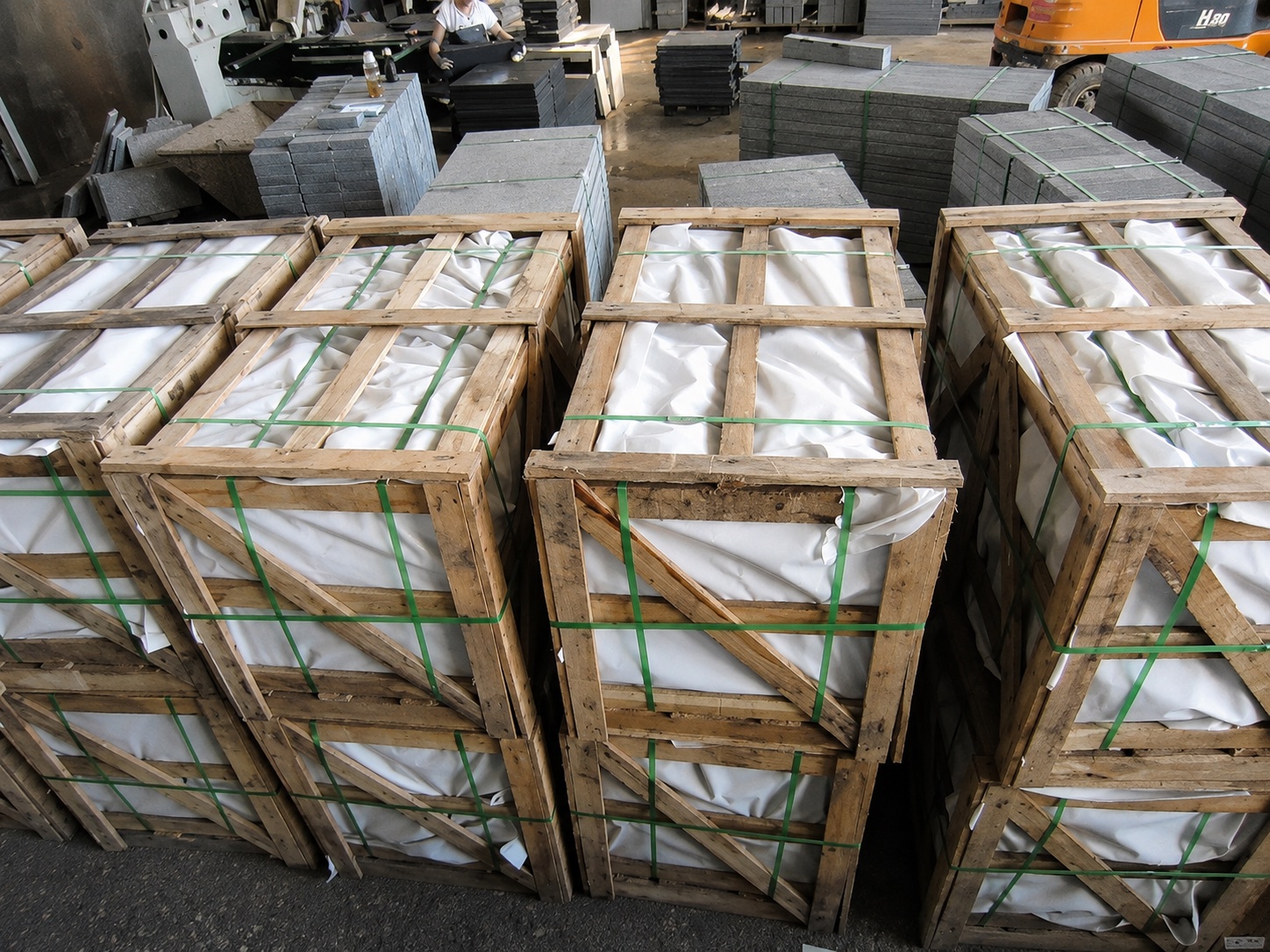
Packing priorities by granite product
From packing approval to arrival inspection
- Packing plan: the factory proposes a method from the product schedule, weight, transport and destination; both parties record it in the order or packing appendix.
- Numbering and list: case numbers correspond to sizes, quantities, drawing references or installation zones for packing, inspection and site distribution.
- Pre-dispatch record: retain agreed photographs of internal protection, external packing, labels and loading, together with the packing documents.
- Transport handover: buyer, forwarder and site confirm vehicle or container limits, handling equipment and the delivery time window.
- Arrival inspection: record external condition before opening, reconcile by case number and photograph any exception continuously during unpacking.
Destination documents require order-specific confirmation
Wood-packaging treatment, labels, origin, inspection and import-document requirements can vary by destination, transport method and order terms. The buyer should provide the port and required records at quotation stage for written confirmation by the factory, forwarder and importer.
Review the quality-control process, or open the product centre for dimensions and finish requirements.
PACKING FAQ
Questions about granite packing and shipping
Should granite be packed on pallets or in crates?
There is no universal answer. Packing should follow shape, size, weight, finish, transport method, handling equipment and destination requirements. Regular heavy units may be reviewed for pallets, while thin panels and custom pieces usually need a more complete enclosure and restraint.
Do export wood packages always require ISPM 15 or a fumigation document?
The requirement and accepted evidence depend on destination, wood-packaging type and current import rules. The buyer or forwarder should provide destination requirements before ordering, and the factory should confirm the available packaging and documents in writing.
Which records should be requested before dispatch?
Agree a packing list, case-to-size schedule, packing photographs, quantity confirmation, weight or volume data, label format and the inspection or shipping documents stated in the order.
Can different sizes be packed in one case?
It can be reviewed, but layering, separation, case numbers, size details and unloading sequence must be clear to avoid site confusion and uneven loading.
What should be checked first on arrival?
Record the container or vehicle, seal and external package condition before unpacking, then reconcile case numbers, quantities and sizes. Photograph damage, movement or moisture continuously during unpacking and follow the contract and carrier notice process.
Send the product list, destination and unloading conditions
A packing quotation needs product sizes, quantity, transport method, destination, document requirements and site handling conditions.
Send packing and delivery requirements →